
THE TOP TEN VIDEO GAMES… of MMXXV represent a brief respite from the mediocrity of the artform, a handful of substantive, or fun, experiences within an ocean of exploitative horseshit. Before we get to the best, the Worst Disappointments of the year alongside a few unfinished games should account for stuff I’d played but didn’t end up ranking. Otherwise the Top Ten list itself only features games I’ve completed at least once and doesn’t include multi-player only or massively online games with one exception. The one game I haven’t completed yet that I’d liked this year was The Séance of Blake Manor.
The most DISAPPOINTING games of the year:
[6] Vampire: The Masquerade Bloodlines II – As a numbered sequel this game could’ve lived up to the janky ambitions of the immersive sim/action RPG roots of the first in the series of it weren’t tainted by issues of development, basically every studio it touched was the wrong fit. The Chinese Room‘s Dishonored-esque take on this realm was fun to play to start with a (mostly) compelling storyline developed throughout but I couldn’t get past the small, bland chunk of Seattle available to explore and the repetitious tasks peppered throughout. Overall I’d compare the experience to that of Vampyr (2018) another game where the main character is both ferally a vamp but also a detective… but somehow not as good at either action or dialogue-based interaction. It probably should’ve been shipped under a different name.
[5] Wuchang: Fallen Feathers – Both this game and The First Berzerker Khazaan are what everyone should be considering Soulslike slop where the player is tasked with long and generic slogs through difficult barrages of enemies for low impact rewards and a pretty dry set of combat options. The story is almost as incoherent as Nioh‘s, the action insists upon its parry system, the level design/exploration and such felt endless, expansive and completely dull. The soulslike difficulty-spiked fatigue hit me real hard in 2024 (Black Myth Wukong, esp.) and I’m not going to bother again in 2026. Create an interesting world, different mechanics, a story worth telling, or just go away at this point.
[4] Assassin’s Creed Shadows – The negativity surrounding this game was questionable per the persisting “gamer gate” circles… from my perspective (a historical fiction fan) Shadows‘ story only fails because it doesn’t line up with interesting characters, set pieces and challenges. The dual protagonist device starts strong enough but the game itself doesn’t find its open world breach quickly and instead tells a predictable, poorly acted story that I’d chosen to rush through rather than explore. I can’t count how many times I put this game down to focus on something else and that is saying a lot since I’ve 100%’d every game in the series besides Rogue and Unity.
[3] Blades of Fire – Spongey enemies, low-impact combat, bland dialogue, infuriatingly mazelike level design, a bullshit over-the-shoulder POV, and slow progression made this game a damned slog which recalls the action RPGs of the pre-Dark Souls era. What appears to be a throwback with a strong weapon smithing element turns out to be a dull, charmless feat which never stops stepping on the player’s toes. My main reason for picking up this game was for the sake of being a fan of MercurySteam‘s work in the past with Castlevania: Lords of Shadow and Metroid: Dread yet I don’t think they’ve brought a similar standard here. Running in circles like a fool, not sure how to progress, and getting mobbed by enemies had hating most of its ~40 hour span. One of my least favorite final boss fights in any game this year.
[2] The Outer Worlds 2 – Bland, overly familiar, repeats the dry assed low-impact narrative of the first game. Uninteresting weapons, predictable skill tree, slog of fetch quests. Weak character interactions, choices/dilemma were largely without remarkable feature, world is brilliantly unlikable yet too soft with its satire. Much of this game does the Fallout/TES thing where the voice actor outshines the facial animations leading to a cheesy carnival ride through all dialogue sans any compelling villains and compatriots alike. After playing Avowed and falling off quickly I’m not sure why I stuck with this game… Didn’t like any characters other than the crusader and the Jetsons robot that heals. I remain a fan of Obsidian Entertainment but for my taste their legendary streak died after Pillars of Eternity II: Deadfire and everything delivered under Microsoft feels generic.
[1] Metroid Prime 4: Beyond – I do not own a Nintendo Switch 2 so I only had about a week (8 days) to finish this game after borrowing a system from a friend who’d reviewed the game professionally. So, granted I rushed through its ~15 hour story and left a lot of the completionist stuff for last but as a huge fan of this shard of the Metroid realm it felt great to start. The more time I spent in this realm the sooner its issues began to glare where storytelling, puzzle-solving, exploration and even combat were largely prescribed and linear. The feeling of linearity was so persistent despite the “open world” emptiness provided I’d kept falling asleep holding the game console.
Choices for the best video games of 2025 were uncomplicated: The central dilemma was “Did I have fun?” versus “Was this a great gameplay loop?” with the final decider being “How about the story?“, simple as. I don’t need any one video game to do everything per se but here you’ll find the stuff that’d truly immersed and impressed in a way that only a video game could’ve. Also, some nostalgia factors into at least two choices.
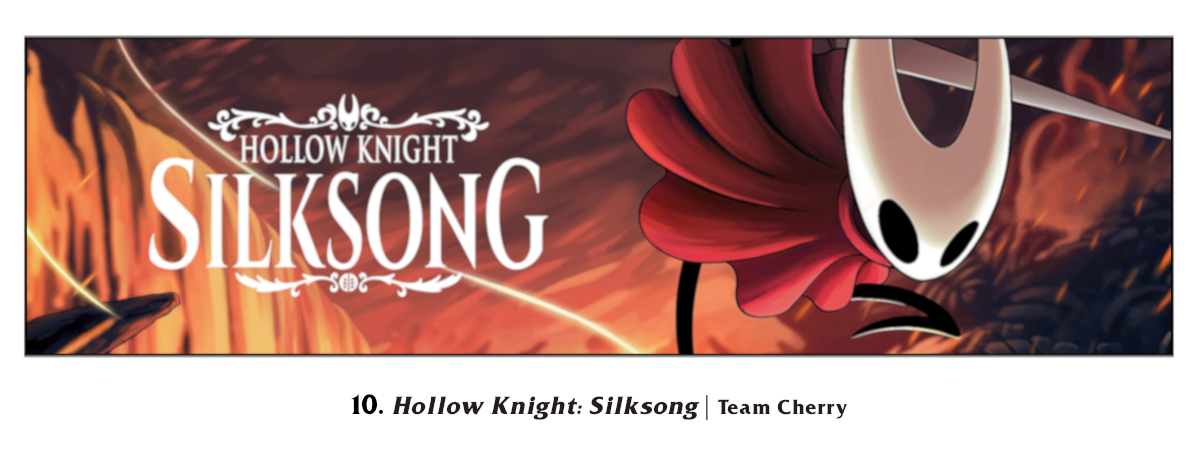
I can’t think of a more difficult, unrewarding and slow-to-start game than Hollow Knight: Silksong this year. I remember burning through a small chunk of the early game before getting stuck on the Fourth Chorus boss, hitting it something like ~40 times before losing and realizing this game was going to be a complete bitch compared to the first. It was a real challenge, one that my aging PS5 controller wouldn’t live through, and I didn’t get the “true” ending but there was some sense of achievement and a number of adrenaline-worthy wins which’d held this game in mind. Wouldn’t recommend it to most folks, though.
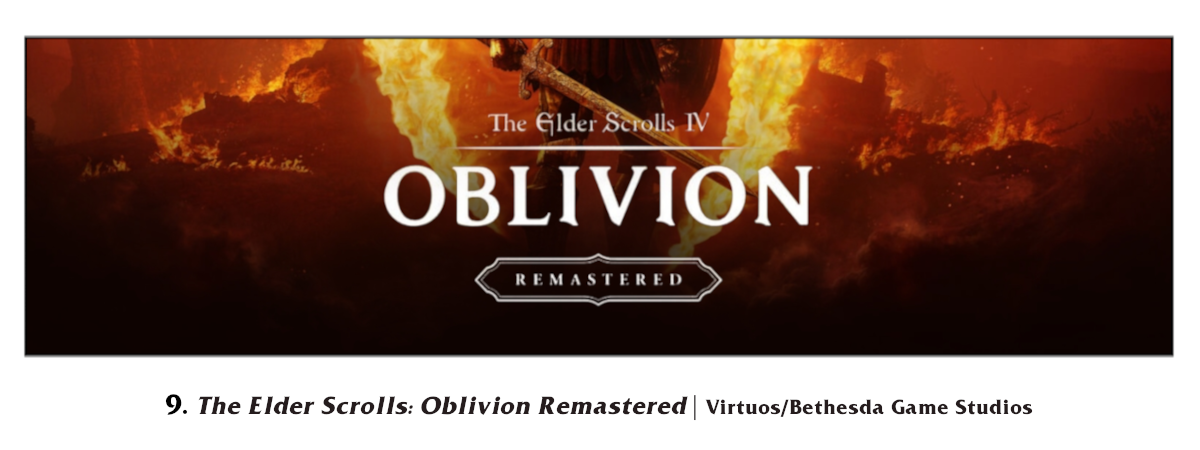
All that needs to be said about TES IV: Oblivion has been said at this point yet it is worth pointing out that this much easier, scaled, and generally bugfixed remaster would still be fun without its nostalgic value. Open world RPG games haven’t progressed so fantastically since the original released and this rings especially true after spending time with Avowed earlier in the year and in that sense the core experience holds up and tells its story well enough. Yes, you’ll become overpowered and run out of things to do if you’re clever and no doubt the jank/bugs and cheeseable shit is all still there but I couldn’t think of many games I’d had as much fun with this year.
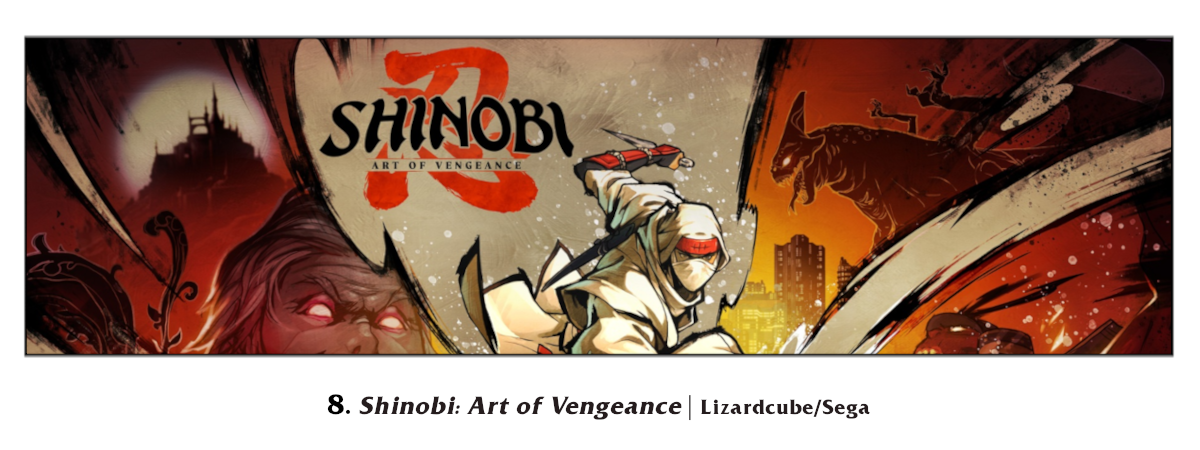
Though I didn’t discover the Shinobi series until the third canonical game released on the Sega Genesis in 1993 I eventually made a point to play all of them when I was more of a “retro collector” back in my 20’s. Though none of the series topped the third mainline game for my taste (don’t let anyone tell you Shinobi PS2 was good at all) none of them had quite as much of a focus on music or visual style. Parisian game studio Lizardcube have done a brilliant job of translating old Sega properties into fluid, almost comic book inspired animation via Wonder Boy and Streets of Rage revivals and of course they’ve done it again here in a level-based quasi-metroidvania sort of deal with optional exploration and challenges. While the game was a challenge it wasn’t so daunting that I’d felt discouraged to complete it 100% and do all of the optional areas etc. Compared to the strange nostalgia of Ninja Gaiden and Terminator 2D revivals this year this was actually a great game that didn’t play like a cheap-ass romhack.
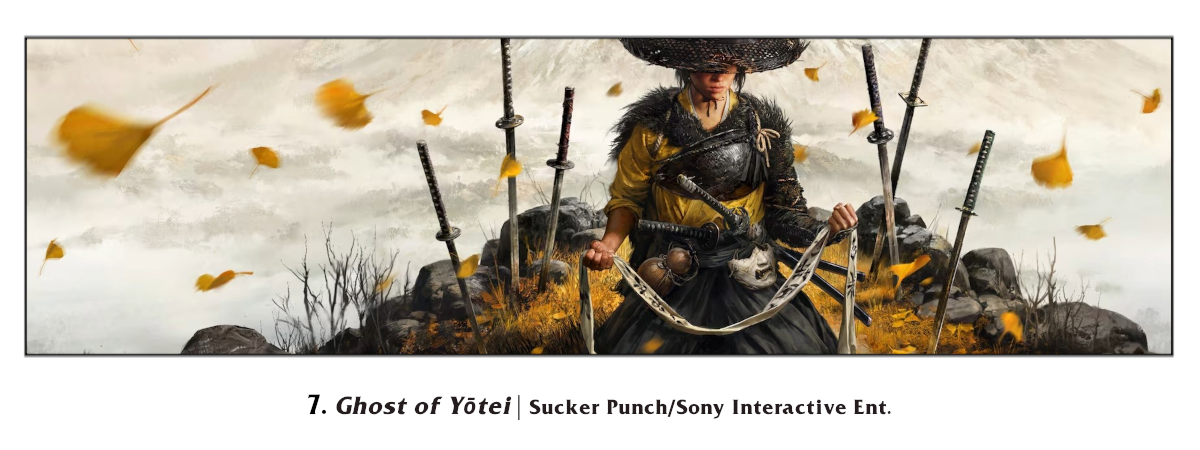
Ghost of Yōtei was designed to be experienced in full and to the point that it cannot stop serving as a talking bidet for the player, willing to coach and wipe ’til you’ve completed its checklists and come out sparkling. Although the magic of Ghost of Tsushima (a mix of simplicity in design, an impressive sense of place and story intrigue alongside visceral action) was not recreated in full within the intentionally limited three act scope of this follow-up the production values do ultimately overtake the overwhelming sensation of an open-world, task-heavy game. The protagonist is unlikable, course, anxious, suspicious, and barely believable when it does come time to be vulnerable: Without any analogue for the intimacy and wise introspection offered by Jin in the first game the soul of this experience was suspect but not enough to ruin the adventure. Much like Doom: The Dark Ages the graphical fidelity, artistic design, quality of experience and tight controls made this game a standout alongside virtually instant load times. Probably one of the best quality of life experiences available this year and to the point that it was maybe too polished, too much of a hand-holding feat. The revenge storyline never goes anywhere interesting but the folks you meet, help, survive with, and hunt are all pretty interesting if not too rarely clever. I think it needed twice as many bounty hunts and half as much internal dialogue from the protagonist.

This small retro first-person 3D dungeon crawler is remarkable for the survival horror atmosphere it generates within muddy dread-borne wandering and intense, sluggish combat a la Condemned and King’s Field. Though I don’t give a lot of games a pass for being blocky, old looking shit this one earns its simple-yet-good aesthetic within its chosen setting and somehow makes exploration worthwhile despite the grey, brown and red mud that coats every part of their realm. While some of the appeal here is nostalgia I’d actually just had fun with this game and even ended up replaying it again later in the year.
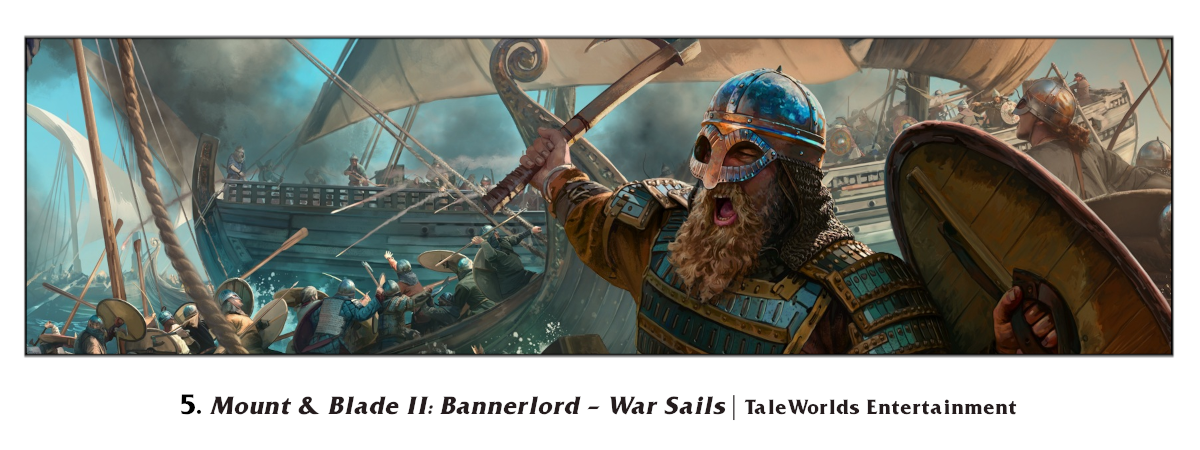
Bannerlord was one of my favorite games of 2022 at #3 so it should make sense that the addition of naval combat brought me back to the game for a more than a few new campaigns. While I am by no means an expert at this game and generally play with a controller it didn’t stop me from having a lot of fun working toward this expansion, taking part in ship battles and overtaking rival ships. Between the arcade-style combat found in various Assassin’s Creed games and the most recent Ys game it was cool to see a version of naval combat that felt in line with the rest of the game but still kept it fairly simple and fast-paced. War Sails isn’t just an expansion but feels like a fully new vestigial limb which deepens the reach of an already huge experience with stealth tactics, disguises, deserters who form alliances against you, better enemy AI etc., all while making room for the Nord race/kingdom. It doesn’t fully reinvent the game but it does update it to such a degree that your experience will be completely different, conceivably bigger and better than back in 2022.
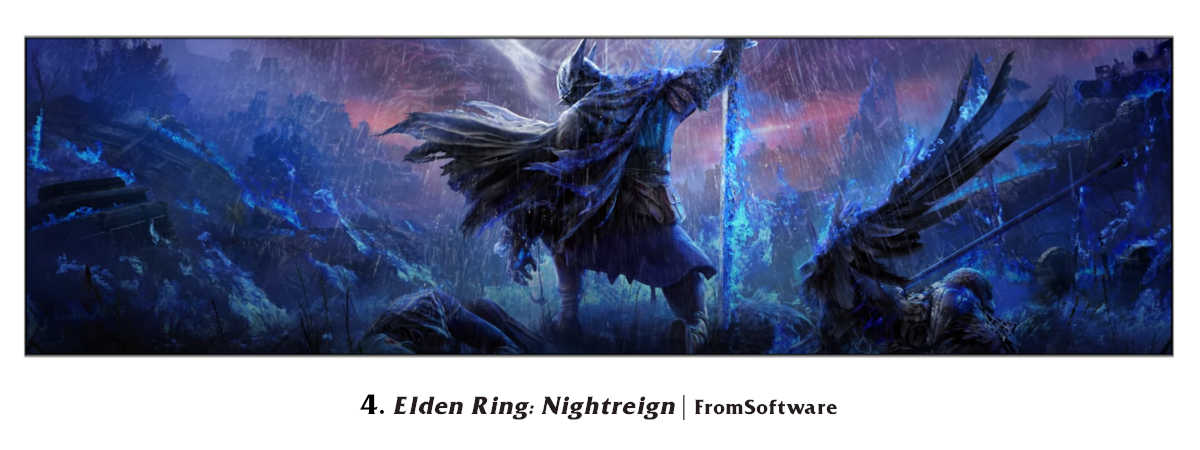
Believe it or not the addictive and heavily competitive side of my personality has only been thoroughly exploited by a few games over the last couple of decades: DOTA 2, Tribes 2, CS: GO, Magic: The Gathering and now I think I can add Nightreign to that list as I’ve already reached the point of deleting the game off of my Steam and PSN games list so that I won’t reinstall and play more. That is to say that I’d found this game pretty much endless fun even when losing to idiots. Did I think I wanted a fast-paced extraction-based PvE action RPG built from Elden Ring assets? No, but I’ve clocked something like two hundred hours with this game simply because I have a friend or two who play every night.
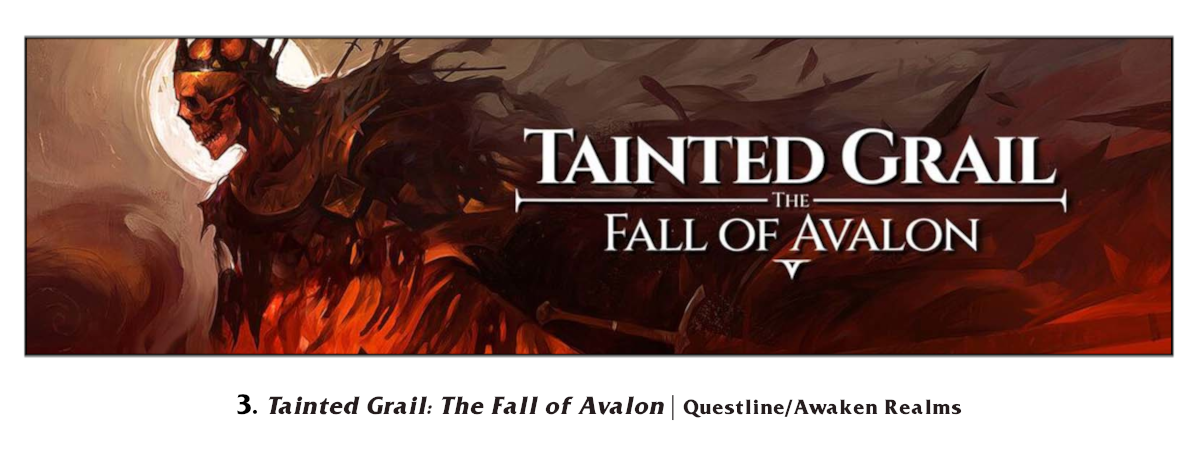
After having such a great time with the remaster of The Elder Scrolls IV: Oblivion earlier in the year I’d decided to pick up this dark Arthurian tale and ultimately found what plays like a well-polished Skyrim mod in a high fantasy grimdark setting. While the game is absolute jank at times, crashed in my first three hours, and didn’t have the most spellbinding story of the year it was great fun to create my character and methodically fleece the realm of all of its goods. While I don’t know that the story is compelling enough to warrant reading the literature (a la the Witcher games) but I’d no doubt gotten lost in this world and loved it despite some frustrations with some of the quest interactions and a few surprise difficulty spikes. I’m hoping the Gothic remake coming next year ends up being less of a mess (or, not an Elex level turd) without losing the feeling of 2000’s first person open world RPG games as this game captures that feeling perfectly. Despite its obvious issues this one is worth putting some serious time into.
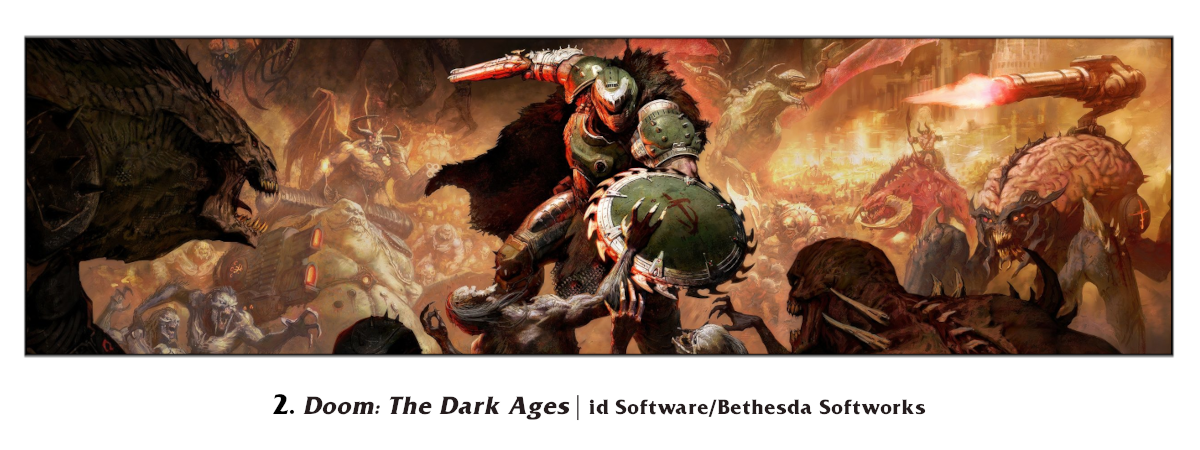
While I’d appreciated the parkour ready action and labyrinthine levels of Doom: Eternal, one of the finest games in the franchise, this follow-up is grounded like a tank and reads more like a late 90’s era FPS than an exploration heavy action RPG. The gameplay loop, which once again centers around mid-sized arena encounters with waves of demon spawn, takes place within a series of semi-open areas and a handful of gimmick levels where you’ll either pilot a mecha or fly on the back of a dragon. Not only is the story (mostly) coherent but the game itself looks beautiful and ran without a hitch for the entirety of the playthrough. The only game that seemed comparably flawless in its quality control was #7 (Ghost of Yōtei) where not a single hair was out of place and the load times on console were instantaneous. The combat gets old by the end, parrying isn’t a fun challenge when you’re getting spammed by fifteen projectiles at once, but I’d eventually just loosened up the timing and had fun with it. Though I miss the simple multi-player of Doom (2016) I think this is the one game of the three most recent that I’m most likely to go back and 100% just for fun.
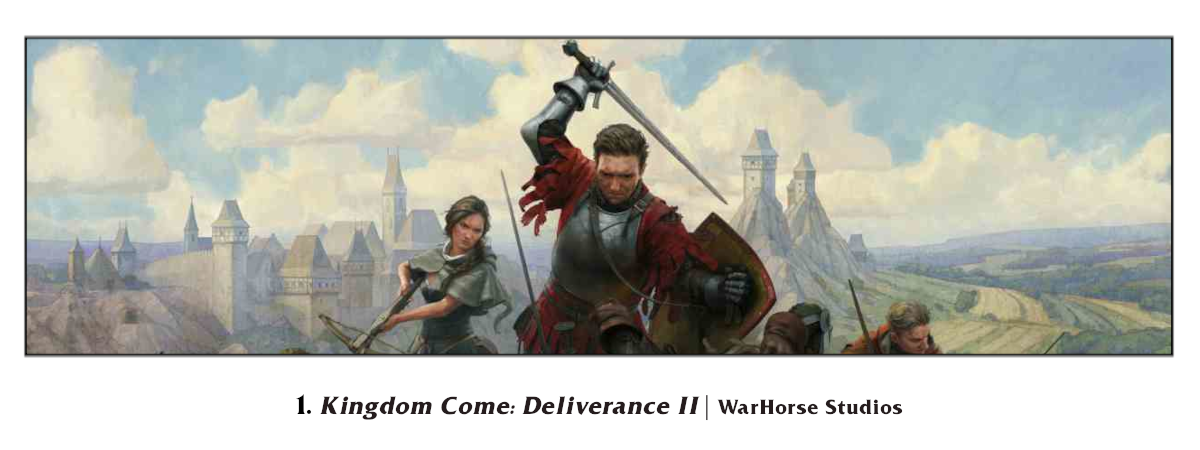
This game requires so much patience, a willingness to brutally fail yet persist and carries enough early game difficulty that it will rightfully turn many folks away at the castle gates… covered in shit and broke. The gameplay does eventually pick up and the story compels slowly-but-surely. For my own taste the story soars above anything else released since Baldur’s Gate 3 and despite it being a period piece (circa 1403 Bohemia) marked by its devotion to realism, caste, and a largely miserable populace. This is an immersive simulation, a challenging role-playing game, and one that puts you in your place so squarely that it feels like absolute shit ’til you put in the work to overcome. Overcoming is the best feeling afforded this year via video games, nothing was handed to me in this realm and I’ll remember each accomplishment because of it. Does the save system still suck ass? Yep, fuck the save system.

Help Support Grizzly Butts’ goals with a donation:
Please consider donating directly to site costs and project funding using PayPal.
$1.00
Make a one-time donation
Make a monthly donation
Make a yearly donation
Choose an amount
Or enter a custom amount
Your contribution is appreciated.
Your contribution is appreciated.
Your contribution is appreciated.
DonateDonate monthlyDonate yearly mystificationzine.com